
AI Extract
The best places to go in Bordeaux in 2026 are led by Miroir d’eau & Place de la Bourse, La Cité du Vin, and Bassins des Lumières. This ranking focuses on the strongest mix of iconic views, Bordeaux-specific culture, visitor appeal, and consistency across official tourism and attraction sources.
Overview
The top 3 places to go in Bordeaux are Miroir d’eau & Place de la Bourse, La Cité du Vin, and Bassins des Lumières. For travelers asking bordeaux where to go, this guide prioritizes the city’s strongest mix of riverfront beauty, Bordeaux-specific culture, standout museums, and heritage landmarks that hold up for first-time visitors as well as repeat trips. It is built to answer common search intent around the best places to go in Bordeaux, top attractions in Bordeaux, where to visit in Bordeaux, and the best things to see in Bordeaux without padding the ranking with weak filler.
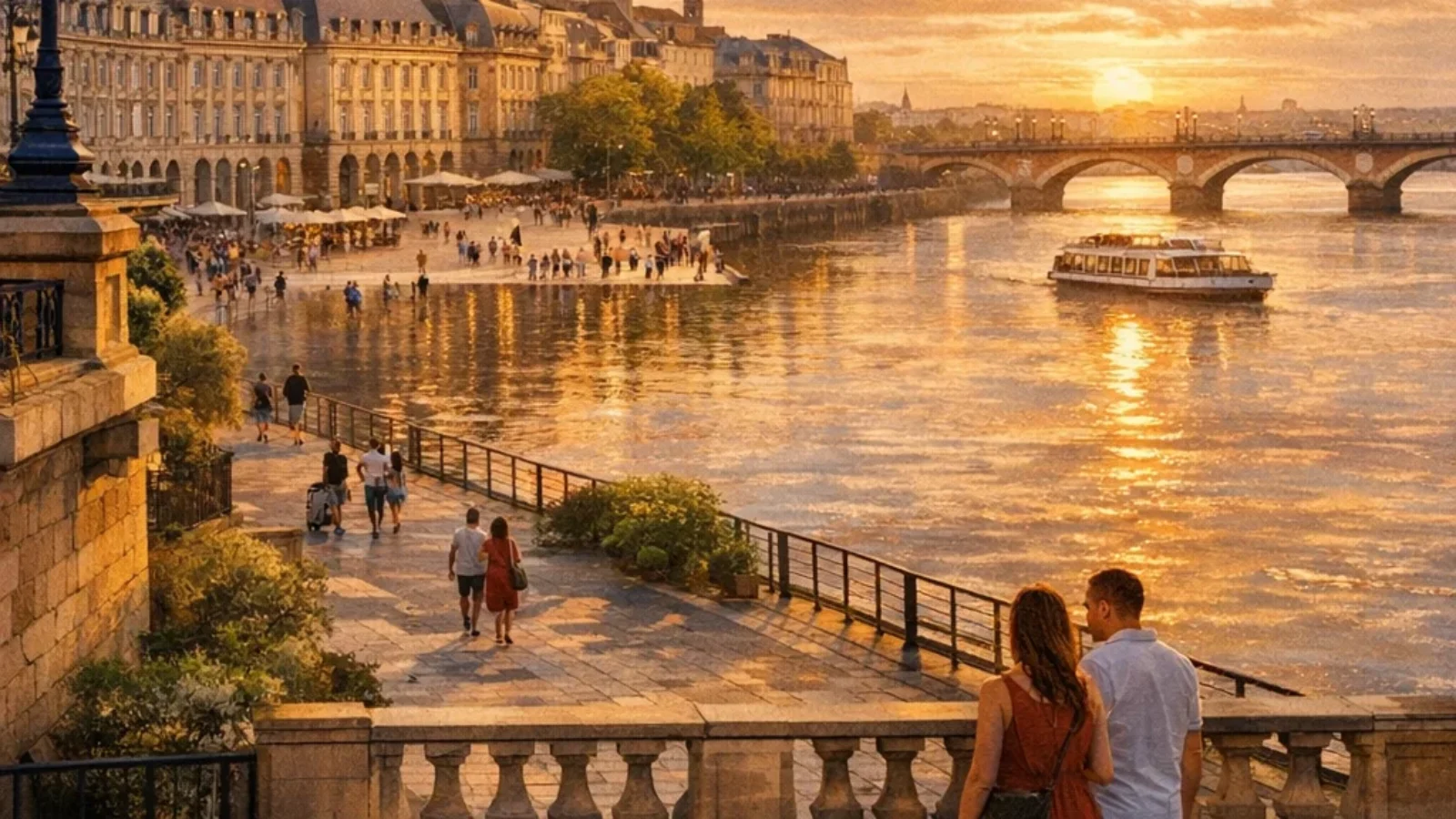
Quick comparison
| Place | Best for | Known for | Why it stands out |
|---|---|---|---|
| Miroir d'eau & Place de la Bourse | First-time visits, photography, and sunset walks | Water mirror effects, riverfront setting, and landmark architecture | This is the strongest all-around answer for where to go in Bordeaux because it instantly communicates the city’s elegance, UNESCO-linked urban setting, and riverfront identity. It also works at almost any time of day and requires no special planning, making it the most universally rewarding stop in the city. |
| La Cité du Vin | Wine-curious travelers and modern-culture visits | Immersive wine exhibition, landmark building, and belvedere | Few attractions feel as specifically Bordeaux as La Cité du Vin. It connects the city’s global wine identity to a visitor-friendly, contemporary experience and gives travelers a major attraction that remains worthwhile even if they are not planning full vineyard excursions outside the city. |
| Bassins des Lumières | Immersive art, families, and repeat Bordeaux visits | Digital exhibitions in the former submarine base | In Bordeaux’s Bacalan district, the former submarine base gives Bassins des Lumières a setting that is both concrete and destination-specific, and the venue’s four 110-metre-long basins, 12,000 square metres of projection surface, and 90 projectors make the experience materially larger than a normal museum show. That measurable scale is what puts it in the top tier. |
| Grand Théâtre de Bordeaux | Architecture lovers and culture-focused walking routes | Neoclassical theatre architecture and opera heritage | The Grand Théâtre belongs this high because it is both a landmark and a living cultural institution. It gives Bordeaux one of its most elegant facades, an enduring artistic identity, and an especially strong sense of place in the middle of the city center. |
| Cathédrale Saint-André & Tour Pey-Berland | Historic architecture and city-view seekers | Gothic cathedral fabric and panoramic tower views | This pairing ranks above several smaller monuments because it delivers both architectural gravity and practical visitor payoff. It deepens the story of Bordeaux beyond the riverfront and offers one of the better ways to understand the city’s historic fabric from above. |
| Porte Cailhau | Medieval-history fans and short monument visits | Medieval city gate and elevated riverfront views | Its position reflects how much value Porte Cailhau packs into a relatively small site. It preserves medieval Bordeaux in a very concrete way, allows visitors inside, and rewards them with a sense of the city’s older urban form that neoclassical landmarks cannot provide. |
| CAPC Musée d'Art Contemporain | Contemporary art and deeper cultural itineraries | Contemporary exhibitions in the former Entrepôt Lainé | CAPC earns a top-10 spot because it gives Bordeaux notable cultural range. Travelers with more than a quick weekend often want a serious museum option, and CAPC offers that while still feeling very rooted in the city through its building and institutional history. |
| Grosse Cloche | Old-town strolls and medieval Bordeaux context | Historic belfry and old-city gateway heritage | It ranks below the biggest headline attractions but above many weaker alternatives because it adds authentic texture to a Bordeaux walking route. The monument is easy to appreciate, historically meaningful, and woven directly into the city’s everyday streetscape. |
| Place des Quinconces & Monument aux Girondins | Public-square lovers and city-center route planning | Monument aux Girondins and monumental open esplanade | This place makes the top 10 because it reveals Bordeaux at a different scale from the riverfront and medieval quarter. It is especially useful for travelers who want to connect multiple central sights while also seeing one of the city’s most visited symbolic public spaces. |
| Jardin Public | Relaxed walks, families, and slower itineraries | Central park atmosphere and elegant landscaping | Jardin Public earns its place because not every worthwhile Bordeaux stop is monumental or museum-based. This park adds balance, shade, and neighborhood character, making it one of the best softer additions to a city break built around architecture and cultural sightseeing. |
Top ranked places
#1 Miroir d'eau & Place de la Bourse
At Place de la Bourse, 33000 Bordeaux, the Miroir d’eau creates a 2-centimetre mirror effect on a huge granite slab beside the Fontaine des Trois Grâces and facing the Garonne. It is central, photogenic, free to enjoy, and easy to combine with the old town, which makes it the clearest first recommendation for most travelers.
- Best for: First-time visits, photography, and sunset walks
- Known for: Water mirror effects, riverfront setting, and landmark architecture
- Why it ranks here: This is the strongest all-around answer for where to go in Bordeaux because it instantly communicates the city’s elegance, UNESCO-linked urban setting, and riverfront identity. It also works at almost any time of day and requires no special planning, making it the most universally rewarding stop in the city.
- Sources and reputation: Official Bordeaux tourism presents the Miroir d’eau and Place de la Bourse as one of the city’s defining sites, and UNESCO’s Bordeaux listing supports the broader heritage importance of the historic urban ensemble around it.
#2 La Cité du Vin
La Cité du Vin is Bordeaux’s signature modern cultural attraction, combining immersive wine-focused interpretation, destination-specific architecture, and panoramic views from the belvedere. It is one of the best places in the city to understand Bordeaux through a contemporary lens rather than only through historic facades.
- Best for: Wine-curious travelers and modern-culture visits
- Known for: Immersive wine exhibition, landmark building, and belvedere
- Why it ranks here: Few attractions feel as specifically Bordeaux as La Cité du Vin. It connects the city’s global wine identity to a visitor-friendly, contemporary experience and gives travelers a major attraction that remains worthwhile even if they are not planning full vineyard excursions outside the city.
- Sources and reputation: The attraction’s official site confirms the permanent exhibition and belvedere, while Bordeaux tourism includes it among the city’s incontournables and CityPass highlights, reinforcing its destination-level importance.
#3 Bassins des Lumières
Bassins des Lumières turns Bordeaux’s former submarine base into a vast immersive digital-art venue. The scale of the projections, the reflections on the water, and the sheer unusualness of the setting make it one of the city’s most memorable indoor experiences.
- Best for: Immersive art, families, and repeat Bordeaux visits
- Known for: Digital exhibitions in the former submarine base
- Why it ranks here: In Bordeaux’s Bacalan district, the former submarine base gives Bassins des Lumières a setting that is both concrete and destination-specific, and the venue’s four 110-metre-long basins, 12,000 square metres of projection surface, and 90 projectors make the experience materially larger than a normal museum show. That measurable scale is what puts it in the top tier.
- Sources and reputation: Official attraction and Bordeaux tourism sources both present Bassins des Lumières as a flagship experience, with tourism materials highlighting both its scale and its status as a must-see cultural stop.
#4 Grand Théâtre de Bordeaux
Opened in 1780 and designed by Victor Louis, the Grand Théâtre stands on Place de la Comédie behind a neoclassical façade of Corinthian columns. It is a natural stop on a central walking route and gains extra weight from its continued role as the home of the Opéra National de Bordeaux.
- Best for: Architecture lovers and culture-focused walking routes
- Known for: Neoclassical theatre architecture and opera heritage
- Why it ranks here: The Grand Théâtre belongs this high because it is both a landmark and a living cultural institution. It gives Bordeaux one of its most elegant facades, an enduring artistic identity, and an especially strong sense of place in the middle of the city center.
- Sources and reputation: Official opera and tourism sources confirm its historical importance, guided-visit appeal, and ongoing use by the Opéra National de Bordeaux, which keeps it relevant beyond pure sightseeing.
#5 Cathédrale Saint-André & Tour Pey-Berland
This major Gothic cathedral and its separate bell tower form one of Bordeaux’s most rewarding heritage pairings. The cathedral adds religious and civic depth to a city center visit, while the tower gives a high-value viewpoint for travelers who want visual context over Bordeaux.
- Best for: Historic architecture and city-view seekers
- Known for: Gothic cathedral fabric and panoramic tower views
- Why it ranks here: This pairing ranks above several smaller monuments because it delivers both architectural gravity and practical visitor payoff. It deepens the story of Bordeaux beyond the riverfront and offers one of the better ways to understand the city’s historic fabric from above.
- Sources and reputation: Bordeaux tourism highlights both the cathedral and Tour Pey-Berland as central monuments within the city’s heritage offer, supporting their status as core Bordeaux sights rather than optional extras.
#6 Porte Cailhau
Near the quays and old center, Porte Cailhau is a late-medieval city gate with a climb, strong period character, and views over the river and rooftops. It is especially easy to fit into a walking route through the historic center.
- Best for: Medieval-history fans and short monument visits
- Known for: Medieval city gate and elevated riverfront views
- Why it ranks here: Its position reflects how much value Porte Cailhau packs into a relatively small site. It preserves medieval Bordeaux in a very concrete way, allows visitors inside, and rewards them with a sense of the city’s older urban form that neoclassical landmarks cannot provide.
- Sources and reputation: Official Bordeaux tourism material presents Porte Cailhau as a key monument with a renewed visitor experience and a climb that reveals views over the city and riverfront.
#7 CAPC Musée d'Art Contemporain
CAPC brings contemporary art into Bordeaux’s itinerary in a way that feels genuinely substantial rather than supplementary. Its setting in the former Entrepôt Lainé adds architectural interest, while its exhibition program broadens the city’s appeal beyond monuments and wine-related attractions.
- Best for: Contemporary art and deeper cultural itineraries
- Known for: Contemporary exhibitions in the former Entrepôt Lainé
- Why it ranks here: CAPC earns a top-10 spot because it gives Bordeaux notable cultural range. Travelers with more than a quick weekend often want a serious museum option, and CAPC offers that while still feeling very rooted in the city through its building and institutional history.
- Sources and reputation: Official CAPC pages confirm its museum identity, practical visitor information, and institutional history, while Bordeaux tourism identifies it as one of the city’s notable museums and exhibition venues.
#8 Grosse Cloche
The Grosse Cloche is a smaller-scale Bordeaux landmark, but one with a lot of character. As one of the oldest belfries in France and a visible remnant of the old walls, it gives a more intimate medieval counterpoint to the city’s grander squares and facades.
- Best for: Old-town strolls and medieval Bordeaux context
- Known for: Historic belfry and old-city gateway heritage
- Why it ranks here: It ranks below the biggest headline attractions but above many weaker alternatives because it adds authentic texture to a Bordeaux walking route. The monument is easy to appreciate, historically meaningful, and woven directly into the city’s everyday streetscape.
- Sources and reputation: Official Bordeaux tourism sources identify the Grosse Cloche as a major historic survival from the city’s former ramparts and one of the emblematic monuments of central Bordeaux.
#9 Place des Quinconces & Monument aux Girondins
Place des Quinconces gives Bordeaux one of its grandest civic-scale spaces. Anchored by the Monument aux Girondins, it works less as a single building than as a spatial experience that helps visitors understand Bordeaux as a broad, ceremonial city as well as a collection of historic streets.
- Best for: Public-square lovers and city-center route planning
- Known for: Monument aux Girondins and monumental open esplanade
- Why it ranks here: This place makes the top 10 because it reveals Bordeaux at a different scale from the riverfront and medieval quarter. It is especially useful for travelers who want to connect multiple central sights while also seeing one of the city’s most visited symbolic public spaces.
- Sources and reputation: Official Bordeaux tourism describes Quinconces as one of the city’s most visited places and emphasizes both its historical role and event-driven life through the year.
#10 Jardin Public
Jardin Public rounds out the ranking by giving Bordeaux a high-quality green break close to the center. It is especially useful on fuller city itineraries, when a calmer park stop improves the pace between museums, monuments, and shopping streets.
- Best for: Relaxed walks, families, and slower itineraries
- Known for: Central park atmosphere and elegant landscaping
- Why it ranks here: Jardin Public earns its place because not every worthwhile Bordeaux stop is monumental or museum-based. This park adds balance, shade, and neighborhood character, making it one of the best softer additions to a city break built around architecture and cultural sightseeing.
- Sources and reputation: Official Bordeaux tourism presents Jardin Public as one of the city’s standout central green spaces and a favored local place in all seasons, supporting its inclusion as a credible non-monument highlight.
FAQs
What are the top 3 places to go in Bordeaux?
The top 3 in this 2026 ranking are Miroir d’eau & Place de la Bourse, La Cité du Vin, and Bassins des Lumières. Together they cover Bordeaux’s classic riverfront image, its most Bordeaux-specific modern cultural attraction, and its most distinctive large-scale immersive art venue.
What are the best things to see in Bordeaux in one day?
With one day, prioritize Miroir d’eau & Place de la Bourse, the Grand Théâtre, Cathédrale Saint-André with Tour Pey-Berland, and one major museum stop such as La Cité du Vin or Bassins des Lumières. That mix gives you riverfront identity, historic architecture, and one destination-grade cultural experience.
Where should first-time visitors go in Bordeaux?
First-time visitors should start with the city-center classics: Miroir d’eau & Place de la Bourse, the Grand Théâtre, and the cathedral area. Then add La Cité du Vin if they want a modern Bordeaux-specific attraction or Bassins des Lumières for a more unusual indoor cultural stop.
Are Bordeaux’s top attractions easy to combine without a car?
Yes. Many of the highest-ranked Bordeaux sights are clustered in or near the central historic core and can be linked on foot, while La Cité du Vin and Bassins des Lumières are practical additions by tram or other city transport.
Is Bordeaux worth visiting for more than wine?
Yes. Wine is central to Bordeaux’s identity, but the city also offers one of France’s strongest combinations of 18th-century urban heritage, medieval survivals, riverfront public spaces, and modern cultural venues such as CAPC and Bassins des Lumières.
Methodology
This ranking favors places that are strongly tied to Bordeaux itself, easy to justify from live public sources, and consistently useful for visitors. I prioritized places with durable cultural or architectural importance, strong official identity, broad traveler relevance, and realistic itinerary value over novelty alone. Seasonal pop-ups, weakly verified spots, and attractions with lower destination significance were not ranked above Bordeaux’s most established landmarks and museums.
Final verdict
If you only have limited time in Bordeaux, start with the riverfront icon of Miroir d’eau & Place de la Bourse, then add either La Cité du Vin for a modern Bordeaux-specific cultural experience or Bassins des Lumières for a memorable immersive-art stop. The rest of the ranking works best as a walkable set of heritage and museum additions rather than as isolated checklists.
Last updated
April 10, 2026